
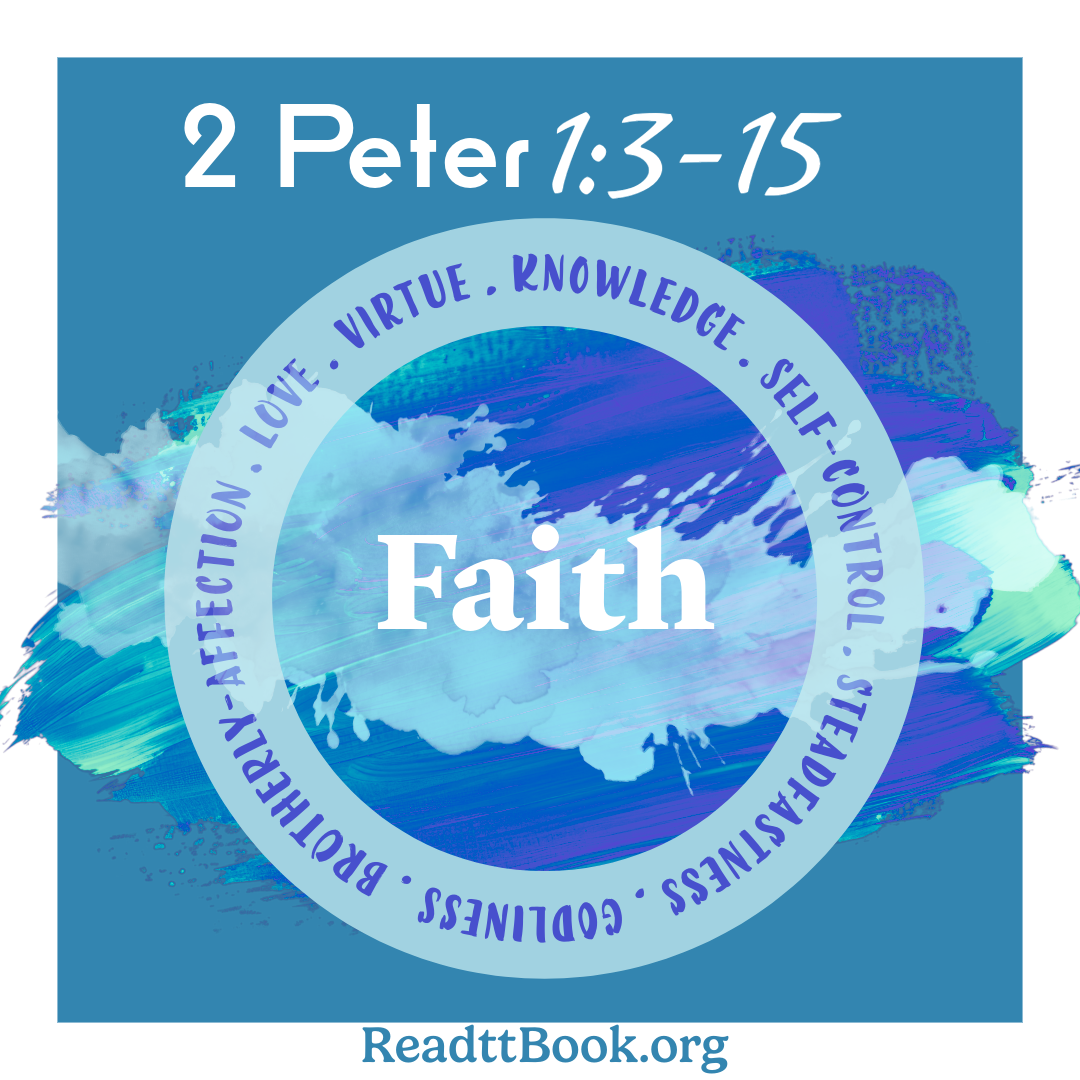
Peter makes it clear in 1 Peter that our salvation is from God, who has “caused us to be born again to a living hope through the resurrection of Jesus Christ from the dead… though you have not seen him, you love him. Though you do not now see him, you believe in him and rejoice with joy that is inexpressible and filled with glory, obtaining the outcome of your faith, the salvation of your souls” (1 Peter 1:3, 8–9). He reiterates this in 2 Peter 1:3: “His divine power has granted to us all things that pertain to life and godliness, through the knowledge of him who called us to his own glory and excellence.”
The faith we have is a gift from God, and by that faith we are saved. So what now for those of us who have been saved? Do we simply rest in that salvation? In one sense, yes—and in another sense, no. We rest in the completed work of Christ, knowing there is nothing we can add and nothing more required for salvation. What a sweet rest that is. Yet out of that salvation, we answer the call to obedience and transformation so that unbelievers will see our good deeds, hear our testimony of Christ, and glorify our Heavenly Father (1 Peter 2:11–12).
We have been saved by God, and there is nothing we can add to that salvation. But we were saved for a purpose—to glorify God and to make disciples of Christ. So there is work we are called to, not to earn salvation, but to honor our Heavenly Father and to share the Gospel. This is what Peter is speaking of in this passage when he tells us to supplement our faith (saving faith, which is a free gift of God) with virtue, knowledge, self-control, steadfastness, godliness, brotherly affection, and love. Let’s look briefly at each of these supplements Peter instructs us to pursue with effort:
- Virtue: moral excellence
- Knowledge: deeper understanding of God and His Word
- Self-control: mastery over desires and passions
- Steadfastness: consistency and endurance
- Godliness: devotion to the ways of God
- Brotherly affection: cherishing our brothers and sisters in Christ
- Love: affection, goodwill, and benevolence toward one another
Now notice how Peter links these together. For instance, he tells us to supplement virtue with knowledge. How does a deeper understanding of God supplement moral virtue (moral excellence), and so forth? Take a moment to look back at verses 5–7 and do this for each pairing.
When we exercise these qualities, Peter tells us they will make us effective and fruitful in the knowledge of our Lord and Savior Jesus Christ. In other words, they equip us to glorify our Heavenly Father (loving God and loving others) and to make disciples of Christ.
There is effort involved, yes—but it is effort rooted in rest. We rest in the completed work of Christ for our salvation, and we work for the kingdom to which we now belong. Not because God needs us, but because He chose us, and it is a great privilege to walk in the works He has prepared for us.
